
A Quick Guide to Embroidered Logos for Staff Uniforms
Nobody warns you, when you take on the task of ordering new staff uniforms, that you’re about to become an accidental expert in stitch counts and thread weight.
One minute you’re approving a colour palette, the next you’re staring at a supplier quote wondering why one logo costs three times another!
Embroidered logos are the most requested branding style for South African workwear, and there are plenty of practical reasons why they are preferred across industries.
In this guide, we’re going to help you make the right logo decisions, before you sign off on 50 polo shirts.
Embroidery Outlasts Other Branding Methods
Embroidered thread can go through an average of 200 industrial washes before you begin to see fading, according to textile branding industry benchmarks, lasting far longer than printed or heat pressed logos typically manage on the same garment.
For businesses issuing uniforms to teams working outdoors, in kitchens, or on job sites, where daily washing is non-negotiable and a peeling logo looks worse than no logo at all, embroidered logos are naturally the absolute best option.
The stitching sits raised above the fabric surface, giving it a textured, tactile finish that reads as premium even on the most basic shirt.
Embroidery Over Printing, Transfer Or DTF
Different branding methods suit different garments and budgets, and the right choice depends on fabric type, order size and how the uniform gets used day to day.
When weighing up your options, this is what you need to know:
|
Method |
Durability |
Best for |
Typical cost per unit |
|
Embroidery |
High, 200+ washes |
Polos, jackets, caps, formal shirts |
Higher for small logos, scales well |
|
Screen printing |
Moderate, fades with washing |
Large orders on cotton tees |
Lower for bulk quantities |
|
Heat transfer vinyl |
Moderate, can peel over time |
Sportswear, one off items |
Moderate |
|
Direct to film (DTF) |
Good, flexible on fabric |
Mixed fabric orders, small runs |
Moderate to higher for small runs |
Screen printing suits large, flat logos on cotton in high volumes, since the cost per unit drops by a lot as quantities rise.
Heat transfer and DTF work well for smaller runs or fabrics that resist embroidery, such as thin performance wear.
And embroidery is excellent on anything that needs to look sharp in a boardroom, a reception area, or in front of a client for years on end.
The Details That Actually Affect Your Final Invoice
It is no secret that embroidery logo pricing is by no means cheap and there are 3 reasons for this.
Stitch count sits at the top of the list, since a detailed logo with fine text or gradients requires significantly more stitches than a simple two-colour mark, and every additional thousand stitches adds to production time and cost.
Logo size matters almost as much, because a badge sized emblem on a chest pocket costs less to digitise and stitch than a full back panel design.
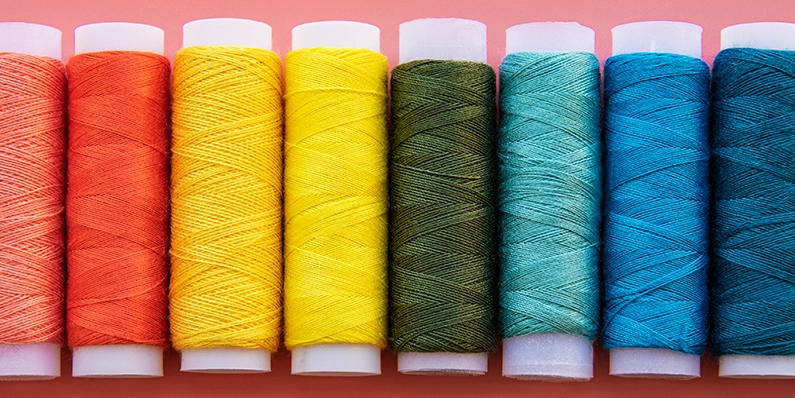
And thread colour count also plays a role, with each additional colour requiring a separate thread change during production, so a five colour logo takes measurably longer to stitch than a two colour version.
If you keep the logo simple, you’ll be able to budget for an embroidered service, and considering the longevity of the logo, in the long run you’ll save by not having to replace uniforms every couple of months.
Fabric Choice
Tightly woven fabrics such as twill and pique hold embroidery stitching cleanly, while stretch fabrics and very thin performance wear can pucker around dense stitching if a stabiliser backing isn’t used underneath during production.
Anyone ordering uniforms across a mixed range, like golf shirts for office staff alongside heavier jackets for outdoor teams, benefits from checking that the supplier adjusts stitch density per fabric type rather than applying one setting across the whole order.
Getting Uniform Ordering Right for your Team
Ordering for a team of any size works best with having everyone’s sizes before production starts, since resizing embroidered stock after the fact means paying for the branding twice.
A single, approved digitised file kept on record also means reorders months or years later match the original exactly, saving both time and the awkwardness of two slightly different logos appearing on the same shop floor.
Mr Matata has supplied corporate clothing, industrial wear and branded workwear across South African businesses since 1996, and our history in the business and our knowledge shows in the small details, like the stitch quality and how quickly our clients get their orders.
A beautifully embroidered logo tells every client, patient or customer walking past your staff exactly who they’re dealing with, so don’t compromise, contact Mr Matata today to get the best quality embroidered uniforms.
Frequently asked questions
How many washes does an embroidered logo survive compared to a printed one?
Embroidered logos typically survive 200 or more industrial washes before visible fading, considerably longer than most screen printed or heat transfer logos on the same garment.
What makes embroidery more expensive than screen printing for uniforms?
Embroidery pricing depends on stitch count, logo size and thread colour count, while screen printing costs drop sharply with bulk quantities, making embroidery relatively pricier for very large single colour orders.
Can any logo be embroidered onto a uniform?
Most logos can be embroidered once properly digitised into a stitch file, though fine text under 6mm and complex gradients often need simplifying to remain legible once stitched.
Which fabrics work best for embroidered logos?
Tightly woven fabrics such as twill and pique hold embroidery cleanly, while stretch or very thin performance fabrics need a stabiliser backing to prevent puckering around dense stitching.
Is embroidery or DTF printing better for a mixed uniform order?
Embroidery suits polos, jackets and formal wear needing long term durability, while DTF printing handles mixed fabric types and smaller runs more flexibly, so many organisations use both across a single order.


